
A wet floor beside the water heater is a call we hear about constantly, and the first question is always the same: where is it actually coming from? Water travels along pipes and collects wherever the floor dips, so the puddle is often nowhere near the source. It might be the temperature and pressure relief valve or its discharge line, the drain valve near the bottom of the tank, the inlet and outlet fittings on top, condensation on a cold tank, or a nearby pipe that has nothing to do with the heater. It might also be the tank itself, and that answer changes everything. In Carmichael, CA, we start every leak call by finding the true source.
Finding the source is a process, not a glance. We clear and dry the area, then watch where new water appears. The relief valve and its discharge pipe get checked first, followed by the drain valve and the inlet and outlet fittings, where dielectric unions and flex connectors tend to corrode. If the heater is gas-fired, we look inside the burner compartment, since water there can be condensation or a sign the tank has given out. When the relief valve is involved, we measure water pressure and check whether expansion has anywhere to go. We recommend nothing until the source is confirmed.
The repair depends on what we found. Valve and fitting leaks are the good news: relief valves, drain valves, dielectric nipples, and flex connectors ride on our trucks, and we can often add an expansion tank or pressure-reducing valve the same day if pressure caused the problem. A leak from the tank body is the bad news, because a rusted-through tank is past saving, and we will say so rather than sell a patch. In both cases, we help limit future damage with a properly drained pan, a leak alarm or automatic shutoff, and a quick lesson on your shutoff valve. Call (279) 241-0046 to have your leak traced in Carmichael.
Most of our service calls are for Water Heater Repair in Carmichael and Water Heater Replacement in Carmichael. That's the place to start for most homes.
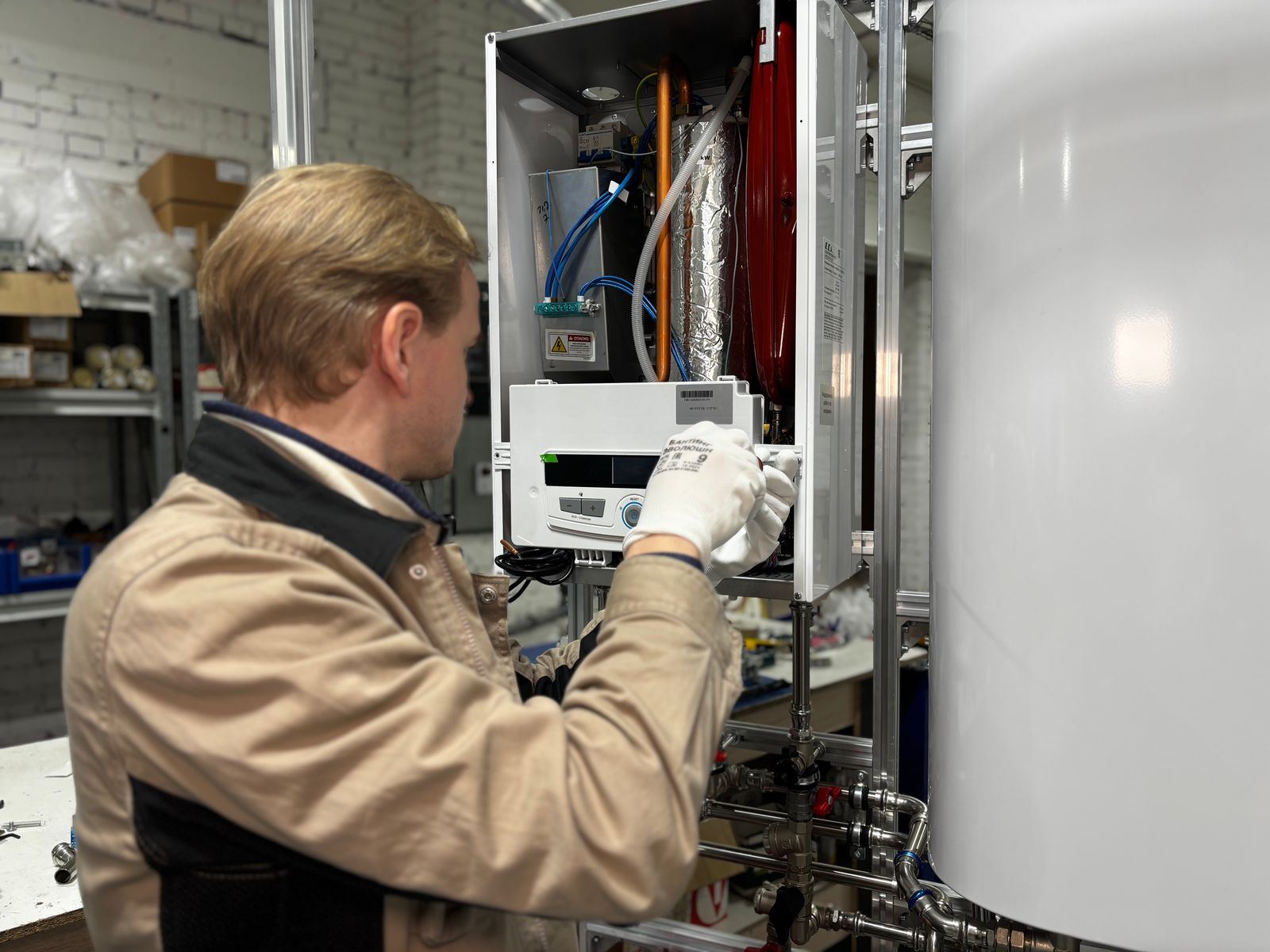
How to Tell Something Is Wrong
Most tanks announce trouble weeks or months ahead with rumbling noises, rusty water, or hot showers that keep getting shorter. Here are the most common indicators that it's time to call a professional:
- Corroded pipe connections or damp flex lines above the heater
- The water meter moving when nothing in the house is running
- A weeping drain spigot on the lower front of the heater
- Water inside the burner compartment of a gas heater
- Water collecting under or beside the heater
- Rusty or discolored hot water paired with dampness at the base
- Moisture or mineral crust at the end of the relief valve pipe
- Warped baseboards or stained drywall beside the water heater
A Slow Leak Never Stays Slow
Left alone, even minor symptoms like rumbling or temperatures that swing from hot to warm tend to mean the heater is working its way toward a breakdown. Don't wait. Get Carmichael Water Heater on the phone at (279) 241-0046 and we'll get a technician scheduled.
Water Heater Trouble? Call Us.
Call Carmichael Water Heater for fast, reliable service.
Call (279) 241-0046 TodayWhat Homeowners Ask Us Most
What a Trained Technician Brings to the Job
A leak looks like a simple job until you try to find it. Water can start at a top fitting, run down under the jacket, and show up at the base, and condensation on cold tanks add confusion. A wrong part is not the only risk. Plugging a dripping relief valve removes the protection against overheating and overpressure, forcing a corroded connection can crack it wide open, and electric heaters bring high-voltage wiring into a wet area. When the tank itself is the source, no DIY fix will hold for long.
With a trained eye, the answer usually comes quickly. We rule out each possible source one by one, confirm it with fresh water on a dried surface, and measure static pressure so a new valve does not start dripping next week. Worn relief valves, weeping drain valves, and corroded connections are replaced on the spot, and pressure problems get a real solution, whether that is an expansion tank or a pressure-reducing valve. A rusted-through tank gets an honest replacement recommendation instead of a temporary fix, and we can add a piped drain pan and a leak sensor to protect your home going forward.
Step by Step: How a Visit Works
We follow the same careful process on every water heater, whether it's a quick thermostat swap or a full tankless conversion. Here's exactly how a typical visit unfolds:
Stop & Protect
We help you close the cold supply and shut off gas or power, then protect nearby flooring and belongings so the damage stops spreading.
Trace the Source
We dry the tank and fittings, then check the relief valve and discharge pipe, the drain valve, the top connections, and the burner area in order.
Check Pressure & Expansion
We gauge household water pressure and look at expansion control, because a closed system without room to expand spikes pressure every heating cycle.
Fix and Confirm Dry
The faulty valve or fitting is replaced, the tank is refilled and bled of air, and we watch the connections under pressure before we leave.
Tips to Keep Your Water Heater Healthy
A few simple habits, like an annual flush and a quick look at the relief valve, can add years to a tank. Here's where to begin:
- Put a water leak sensor on the floor next to the tank so a drip gets noticed early
- Make a habit of checking around the heater for moisture or corrosion every few weeks
- Install a drain pan piped to a safe spot, which matters most for attic, closet, and upstairs heaters
- Make sure a closed plumbing system has a working expansion tank to absorb heated water
- Annual flushing removes sediment that traps heat against the tank floor
- Have household pressure measured, since high pressure wears out relief valves and fittings faster
- Inspecting the anode rod periodically is one of the best ways to delay a tank leak
Should You DIY or Call a Pro?
Relighting a pilot by following the label is one thing. Diagnosing a gas valve, a burned-out element, a dirty flame sensor, or a tankless error code calls for meters and know-how that a pro brings. A side-by-side look:
| Factor | DIY Attempt | Hiring a Pro |
|---|---|---|
| Finding the Source | Fix the part nearest the puddle | Surfaces dried and each source confirmed |
| T&P Valve | Valve swapped without checking why | Root cause fixed so the new valve stays dry |
| Old Fittings | Forced loose and damaged further | Proper fittings installed and tested |
| False Alarms | Normal sweating treated as a leak | Only real problems get repaired |
| Water Damage | Damage prevention skipped | Protection added where it matters most |
| Result | Temporary fix that may fail again | Leak solved and cause corrected |
Get Water Heater Leak Repair Help Today
Cold showers and damp floors don't get better on their own. Carmichael Water Heater can have a technician headed your way soon.
Get Help: (279) 241-0046Areas We Serve for Water Heater Leak Repair
Wherever you are in the area, the same experienced team shows up with the same parts and the same pricing. Find your community below.